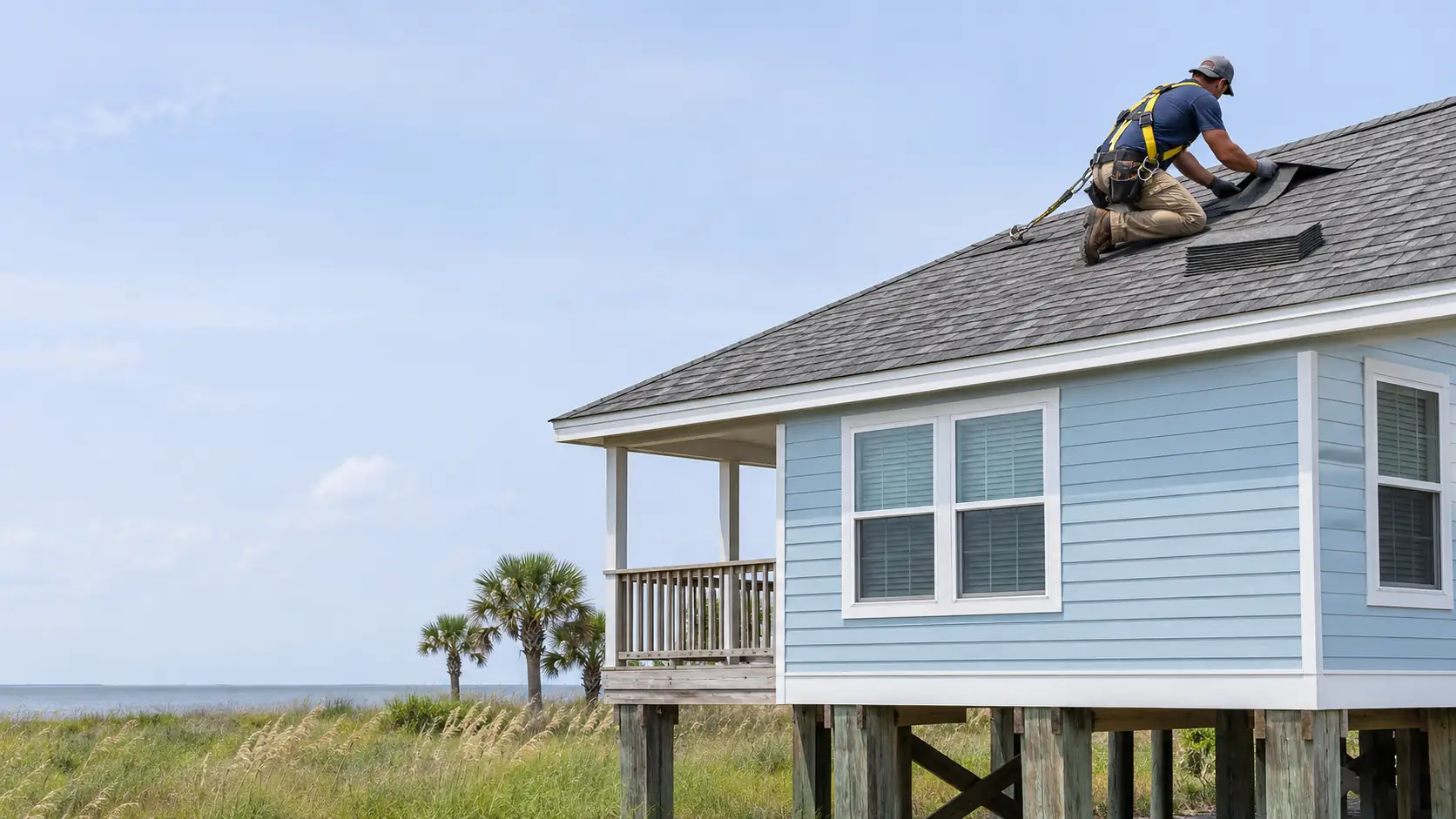
Roofing in Freeport, TX
Freeport roofs sit right on the Gulf, taking the first hit from hurricanes, salt air and wind-driven rain. We repair storm damage, fix coastal wear and build new roofs to windstorm code.
- Both Freeport zip codes
- Hurricane and wind damage
- Built to windstorm code
Roofing on the front line of the Gulf
Freeport is home to Port Freeport and big industrial plants, and it's the closest of our towns to open water. That means the strongest winds when storms come ashore. During Hurricane Beryl in July 2024, gusts reached 94 mph in Freeport, and the city reported homes damaged and destroyed.
Salt air is the slower threat. It corrodes metal flashing, vents, fasteners and gutters much faster than inland. Rusted flashing is one of the most common leak sources we find near the coast, and it often fails quietly until a storm pushes water through.
Freeport is about 15 miles south of Angleton by way of Highway 288. We serve both Freeport zip codes, including raised homes built up off the ground, where the roof has nothing around it to break the wind.
Coastal roof problems we fix in Freeport
- Hurricane wind damageTorn-off shingles, lifted edges and damaged ridge caps after tropical storms.
- Corroded flashing and ventsSalt air rusts metal parts and opens gaps where rain gets in.
- Rusting fastenersNails and screws that rust through and loosen shingles or metal panels.
- Wind-driven rain leaksRain pushed sideways under shingles and around vents and walls.
- Exposed raised homesRoofs on homes built up high take the full force of the wind.
- Edge and gutter damageWind peels back drip edge and gutters, often the start of bigger damage.
WPI-8 matters here: Many Freeport homeowners depend on TWIA for wind coverage. If you're replacing your roof, the windstorm inspection has to happen during the work, so plan it before you start. See how WPI-8 windstorm roofs work.
Before and after a hurricane in Freeport
This close to the Gulf, it pays to have a plan for your roof before storm season, not just after a storm. Hurricane season runs from June 1 to November 30. Before it starts:
- Have the roof checked in spring, and fix loose shingles, worn flashing and lifted edges
- Look for rust on flashing, vents and fasteners, and replace rusted parts before they fail
- Clear the gutters and downspouts so heavy rain drains fast
- Take photos of your roof and attic while they're in good shape, so you have "before" pictures for insurance
- Keep your WPI-8 certificate and insurance papers somewhere safe and easy to grab
After the storm passes
- Stay off the roof until the storm is over and the roof is dry.
- Photograph the damage from the ground and inside the house.
- Cover any openings to stop more water getting in, and call us for emergency tarping.
- Don't sign with anyone who offers to cover your deductible. It's illegal in Texas.
Roofing services in Freeport
From emergency tarping after a hurricane to a full roof replacement, we cover it all in Freeport.
Roofing questions from Freeport
What roofing material holds up best near the coast?
Both architectural shingles and metal can work well when they're installed to high-wind specs. Near salt water, the details matter most: use metal panels, flashing and fasteners made for coastal use so they don't rust out early. See our metal roofing page for more.
How can I make my Freeport roof more hurricane-ready?
Have it checked in spring before hurricane season starts on June 1. Fix loose shingles, worn flashing and lifted edges early, keep gutters clear, and know where your WPI-8 certificate and insurance papers are. When you replace the roof, build it to the windstorm code.
Do you serve both Freeport zip codes?
Yes. We serve 77541 and 77542, and nearby areas toward Clute and Lake Jackson.
Storm damage on the coast?
Call us now. We answer 24/7 and can tarp damage fast.